
UNDERSTANDING VEGETATIVE GROWTH

Building the Foundation Before Flower
Every stage of cannabis cultivation plays a role in the development of the plant, but the vegetative stage is where much of its physical foundation is established.
During vegetative growth, cannabis plants focus primarily on developing roots, stems, branches, and foliage. Rather than directing energy toward flower production, the plant is building the structure that will support its later stages of development.
Understanding this phase provides a useful look at how environment, plant health, and cultivation practices work together throughout the cannabis life cycle.
WHAT IS THE VEGETATIVE STAGE?
The vegetative stage occurs after early plant establishment and before flowering.
During this period, cannabis plants can experience significant increases in size and structure. New leaves and branches develop while the root system continues expanding beneath the growing medium.
Healthy vegetative development helps establish the plant architecture needed for later growth.
The duration and characteristics of this stage can vary depending on genetics, cultivation environment, and production approach.
WHY ROOT DEVELOPMENT MATTERS

Although most visible growth happens above the growing medium, an important part of vegetative development occurs below it.
Roots support the plant by absorbing water and nutrients while helping maintain overall plant stability.
A developing root system allows the plant to support increasingly larger amounts of foliage and biomass as it matures.
For cultivators, this means plant development isn't only about what can be seen above the canopy. Conditions surrounding the root zone can also influence overall plant health.
THE ROLE OF THE ENVIRONMENT
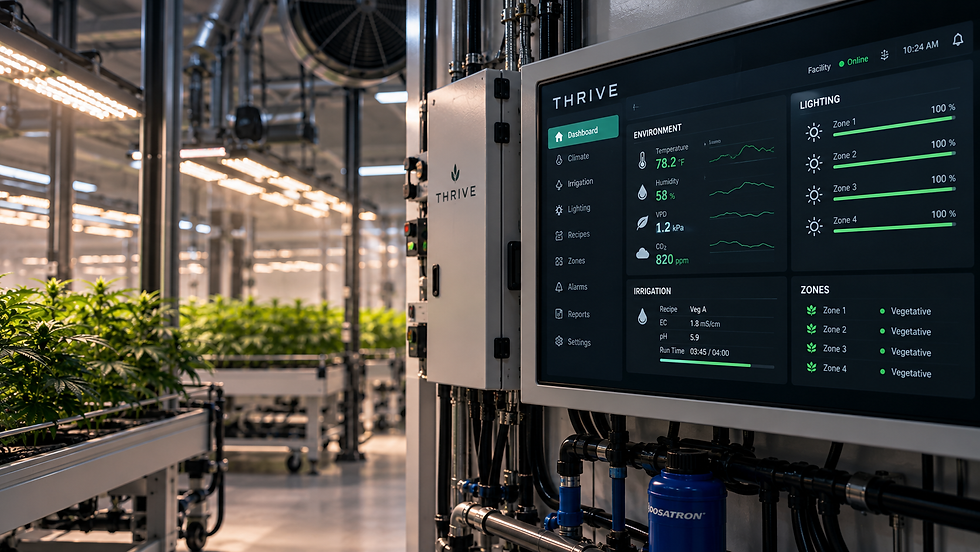
Cannabis plants respond continuously to their surroundings.
Temperature, humidity, airflow, light, irrigation, and other environmental factors can influence plant development throughout the vegetative stage.
In controlled-environment cultivation, these variables can be monitored and managed to create more consistent growing conditions.
Rather than relying entirely on changing outdoor conditions, indoor cultivation provides greater control over the environment surrounding the plant.
That consistency becomes increasingly important as plants progress toward flowering.
DEVELOPING THE CANOPY
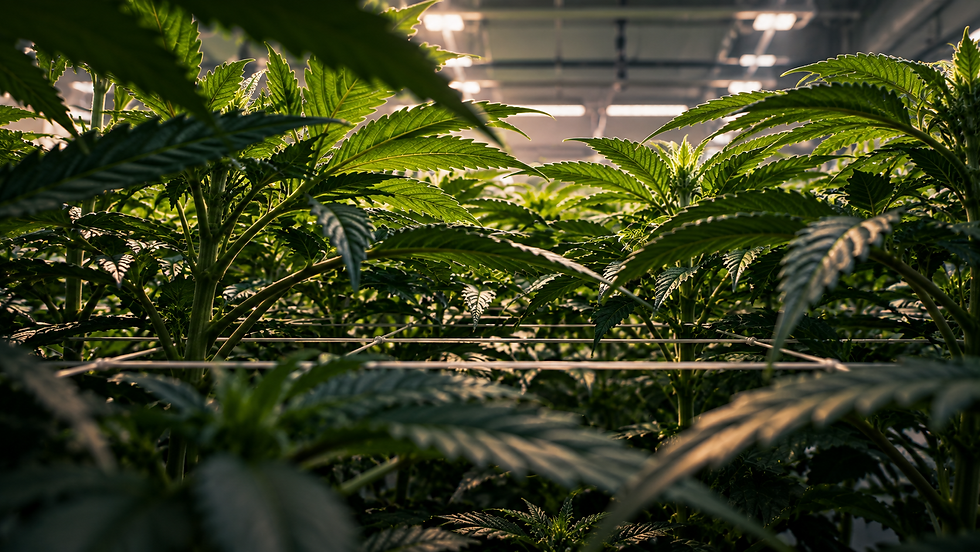
One of the most noticeable changes during vegetative growth is the expansion of the plant canopy.
Leaves capture light that supports photosynthesis—the biological process through which plants convert light energy into chemical energy used for growth.
As plants develop additional leaves and branches, the canopy becomes larger and more complex.
Maintaining an appropriate growing environment throughout this period helps support healthy and uniform plant development.
GENETICS STILL LEAD THE WAY

Even under similar environmental conditions, cannabis cultivars can develop very differently.
Genetics influence characteristics such as plant structure, growth rate, leaf morphology, flowering behavior, aroma, and other traits.
Environmental management cannot completely override those genetic characteristics.
Instead, cultivation involves understanding how a particular cultivar responds to its environment and managing conditions accordingly.
PREPARING FOR THE NEXT STAGE
Vegetative growth isn't the final destination.
It's preparation.
As the plant transitions toward flowering, its biological priorities begin to change. Energy that previously supported extensive structural and foliage development increasingly shifts toward reproductive growth and flower formation.
The health and structure established earlier in the plant's life can therefore influence how it progresses through later stages.
At BADSEED, understanding each stage of plant development is part of understanding cultivation as a complete system—from genetics and environment to harvest.
CONTINUE LEARNING
Next Article:The Flowering Stage: How Cannabis Changes as It Matures
BADSEED Education provides informational content about cannabis cultivation, plant science, and the cannabis industry. Content is intended for educational purposes only and for audiences of legal age where applicable.

Comments